10.11.2026
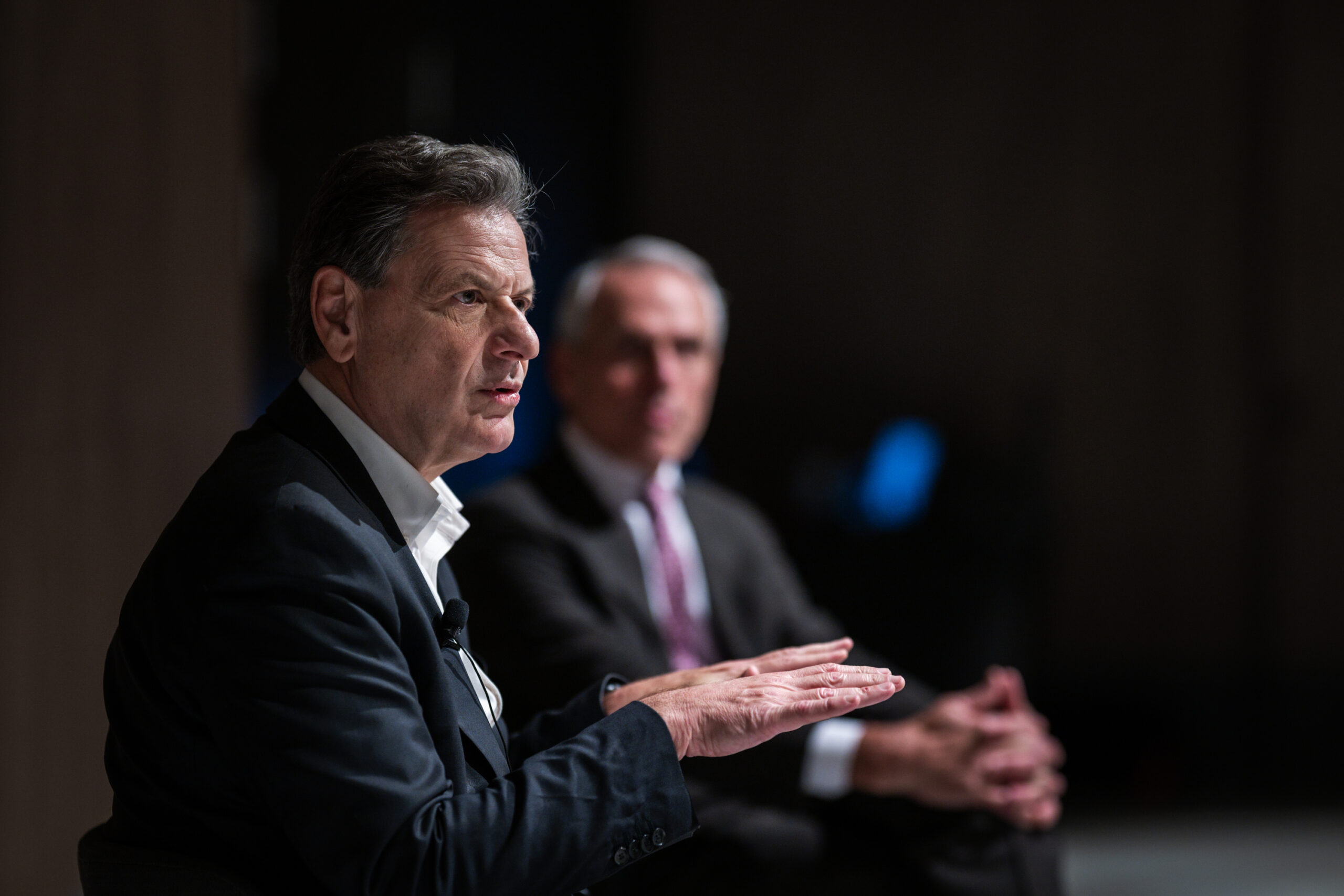
Theodoros Skylakakis, an economist with an extensive career in politics and public administration, shared his insights and perspectives on one of the most significant issues of our time, drawing on the ideas explored in his book, “Artificial Intelligence: The Displacement of Labour.”
Together with Dimitris Andriopoulos, and through an engaging and constructive dialogue with DIMAND employees, we explored the rapid developments in Artificial Intelligence, the new possibilities and opportunities emerging, as well as the challenges we are called to face.
The discussion explored how Artificial Intelligence is reshaping the labour market, transforming the way businesses operate and influencing our everyday lives, while driving profound changes across the economic and social landscape. Beyond its practical applications, we also examined its broader philosophical implications, reflecting on the evolving relationship between humans and technology, the limits of human creativity and the role of individuals in an increasingly technology-driven world.
The conversation also touched on the wider societal and economic questions raised by this transformation. While AI has the potential to generate greater wealth while reducing reliance on human labour, it also brings an important question to the forefront: how will this new wealth be distributed, and who will ultimately benefit from it?
The risk of wealth becoming increasingly concentrated among those who own or control emerging technologies, combined with a potential decline in demand for human labour, could give rise to new forms of economic and social inequality.
In this context, particular attention deserves Theodoros Skylakakis’ proposal for a “Universal Basic Capital”, which he explores in his book. The concept considers how citizens could participate in economic activity, not solely through their labour, but also through access to assets and productive resources, offering an alternative perspective on how wealth and economic opportunities could be distributed in an AI-driven economy.
These reflections raise the question of whether traditional economic models need to be rethought, as we move towards a future in which the very concept of work, the mechanisms of wealth creation and the foundations of income generation may undergo profound transformation.
It was a particularly thought-provoking gathering, bringing forward important questions and diverse perspectives on the changes shaping our new reality and the landscape ahead.